



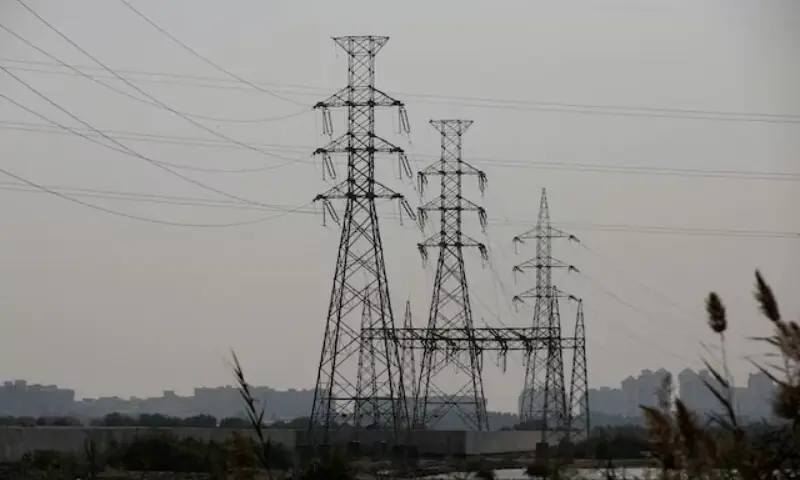
THE government’s commitment to the IMF to scrap untargeted residential electricity subsidies from next year and replace them with a targeted support mechanism through the Benazir Income Support Programme is politically fraught but economically difficult to avoid any longer.
It is also important to end untargeted subsidies because high tariffs have created powerful incentives for consumers to indulge in ‘legal power theft’ by manipulating the system. Households that can afford to do so instal multiple electricity meters, splitting their consumption across connections to remain below the subsidised 200-unit threshold. What was originally designed as relief for lower-middle-income families has evolved into a pricing distortion that rewards gaming the system.
The agreement with the Fund to shift subsidies towards income-based targeting through the National Socio-Economic Registry is therefore not merely an externally imposed condition. It also underscores a hard fiscal reality: the government no longer has the budgetary space to continue carrying hundreds of billions of rupees in untargeted subsidies while the power sector itself remains trapped in circular debt, inefficiencies, theft and under-recovery.
The present system also imposes hidden costs on the wider economy. Cross-subsidies designed to keep residential tariffs low for below 200-unit usage have pushed up electricity prices for industry, undermining competitiveness, exports and job creation. Targeted subsidies will indeed reduce misuse of public resources and direct them towards those who actually need help. However, the transition will come with painful consequences that policymakers cannot ignore.

Between those who truly qualify for BISP support and the affluent who can absorb higher tariffs is a vast lower-middle-income population living precariously from pay cheque to pay cheque. Many of these households do not meet the defined poverty criteria but are struggling with stagnant incomes, inflation and rising utility costs. For them, the removal of subsidised electricity will mean further erosion of disposable income.

A large number of families may be forced to respond by cutting electricity usage and other essential expenditure, thus facing additional pressure to simply keep a few lights and fans running during the hot summer.
In that sense, the reform risks deepening the hardship of the economically vulnerable but officially ‘non-poor’ classes. Consumers are likely to question the fairness of the state’s priorities. The government will struggle to build public legitimacy after ending subsidies for struggling households while continuing various forms of heavily subsidised or free electricity enjoyed by influential segments of the state and public sector elite, including privileged power sector employees.

Whether fully justified or not, the perception that ordinary citizens are being asked to bear austerity while entrenched privileges remain protected feeds public anger and weakens trust in reform. This is why the political difficulty of the decision should not be underestimated.
Published in Dawn, May 9th, 2026
