



Uncertainty around a second round of US-Iran talks in Islamabad has continued to prevail over the past few days as the fragile truce between the two countries nears an end.
While a US delegation — headed by US Vice President JD Vance — is expected in Islamabad for negotiations, the Iranian side has not yet confirmed its participation in the high-stakes talks. US President Donald Trump, on the other hand, has ramped up his threats against Iran, stating that it could “face problems” if it did not return to the negotiating table.
Iran’s top leadership has maintained that it will not negotiate “under the shadow of threats”.
The latest tension also follows the US seizure of an Iranian-flagged ship in the Strait of Hormuz, while a US blockade of Iranian ports has been in place since April 13, prompting Tehran to close the strait again on Saturday.

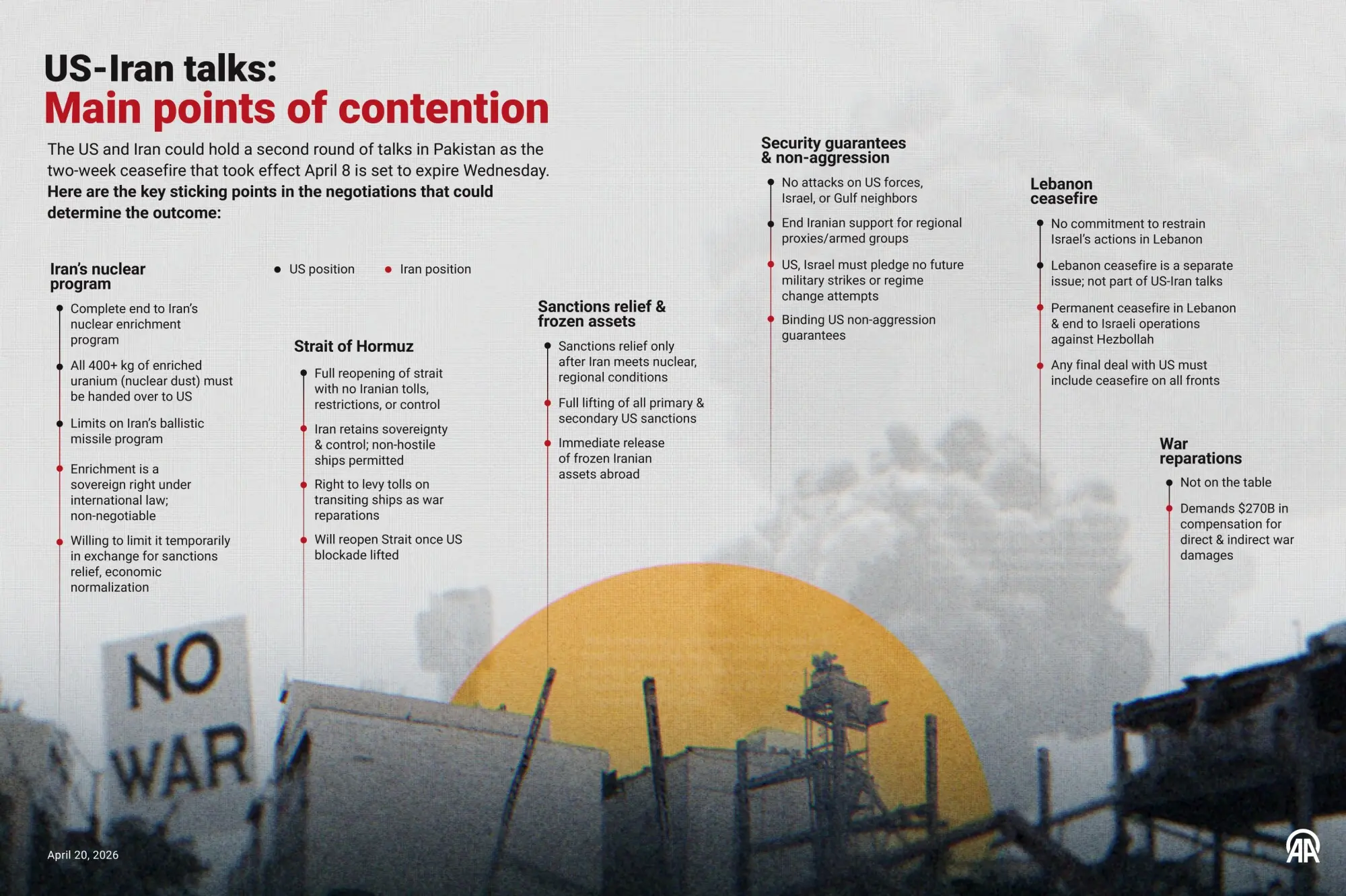
Here are the main sticking points that are expected to be the centre of closed-door discussions, if the two parties meet at the negotiating table again.

Uranium enrichment
The dismantling of Iran’s nuclear programme has been a long-standing US demand, with the US pushing for zero enrichment.
The US and Israel have justified their war against the country with the claim that Iran has been building an atomic bomb.

Tehran maintains that its nuclear programme is purely for civilian purposes and denies seeking nuclear weapons.
Talks will focus on Iran’s stockpile of roughly 440 kilogrammes of uranium enriched to 60 per cent, material that could be used for several nuclear weapons if further enriched by Tehran.
According to the Washington Post, in the last round of the talks, the US sought a 20-year suspension of Iran’s uranium enrichment as part of the deal to end the war.
The 20-year pause would be accompanied by sanctions relief, as per the report. However, the Iranian side in turn proposed to suspend its nuclear activity for five years, The New York Times reported.
Strait of Hormuz
The Strait of Hormuz — the world’s most important waterway for oil shipments — has been a central point in the US-Iran war.
After the initial round of US-Israeli strikes on February 28, Iran utilised its leverage over the strait and restricted movement through it.
Lying between Oman and Iran and linking the Gulf north of it with the Gulf of Oman to the south and the Arabian Sea beyond. Perhaps the world’s most important energy shipping channel, the waterway is about 167 km long.
About a fifth of the world’s oil and liquefied natural gas (LNG) supplies normally pass through the strait.
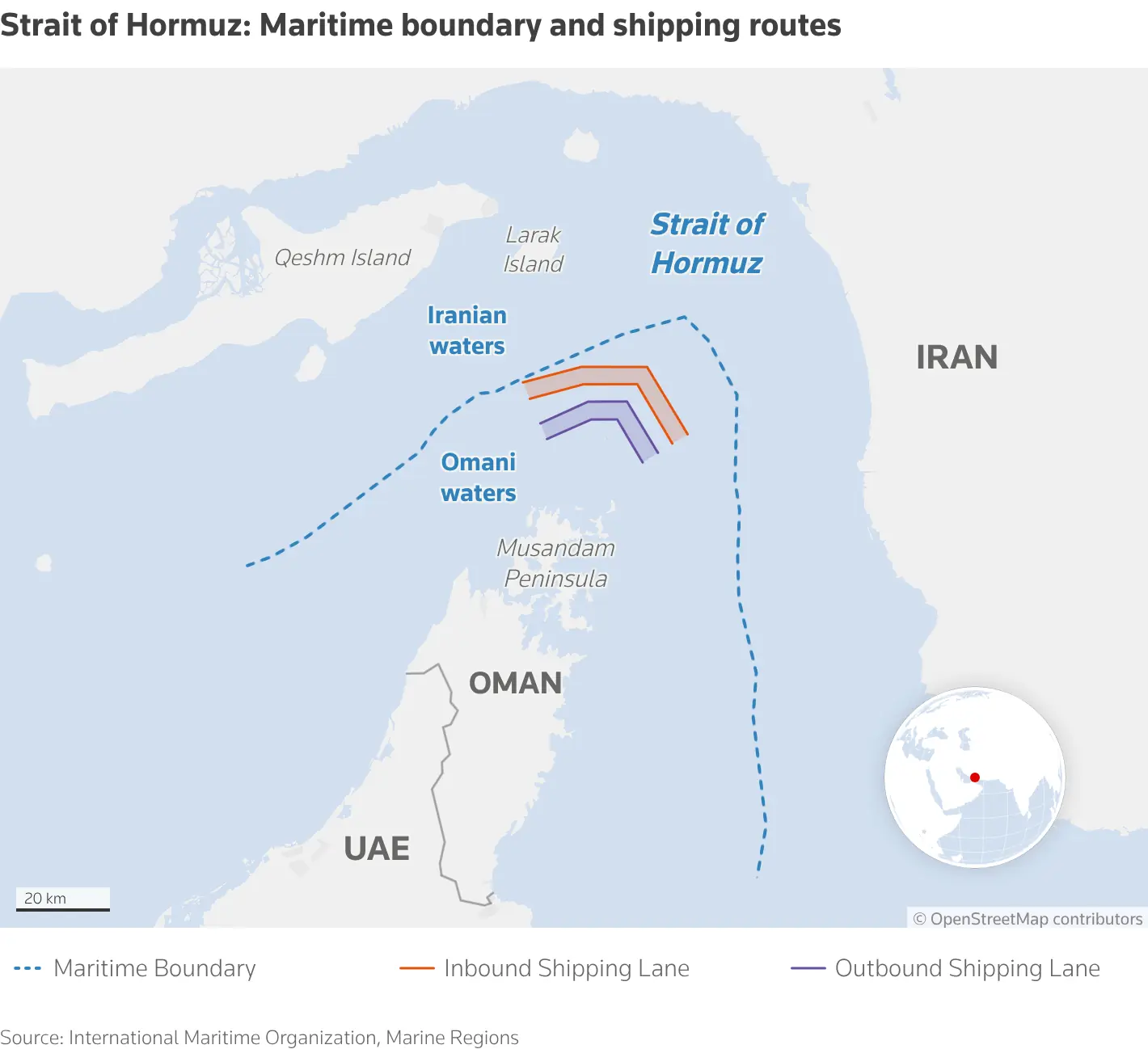
The US has maintained a naval blockade of Iranian ports in response to Iran’s closure of the strait. It demands the complete reopening of the strait without any toll charges.
Iran had earlier floated the idea of charging cargo passing through the strait. It demands an end to the US naval blockade of its ports and reassertion of its control over the waterway.
Security guarantees
The two countries have also sought security guarantees, with Iran asking the other to give up regime change plans, unwarranted military aggression against Iran and a guaranteed permanent ceasefire.
While the US has demanded an end to Iran targeting Israel and US bases in the Gulf states, as well as Iranian support for regional groups such as Hezbollah.
Lebanon
Another sticking point remains a lasting ceasefire in Lebanon, where Israel has launched massive strikes since the war began, insisting they are aimed against Hezbollah.
A 10-day truce, which has witnessed ceasefire violations from Israel, is set to expire on April 26.
Iran maintains that any final deal with the US must include security guarantees for Lebanon to prevent future attacks from Israel.
The US insists that the issue remains separate from the US-Iran talks. A similar stance was adopted by Lebanese President Joseph Aoun recently, who said Israel-Lebanon talks are “separate from any other negotiations”.
War reparations
Iran has also demanded that the US compensate for the damage it has caused in its war against Iran.
According to Al Jazeera, an early estimate indicates that Iran has suffered about $270 billion in direct and indirect damages since the start of the US-Israel war on February 28.
Sanctions relief and frozen assets
Another one of the demands by the Iranian side includes the lifting of sanctions imposed on Iran by the US, as well as unfreezing assets abroad.
The US has maintained that sanctions relief can only be considered after Iran gives up on its nuclear ambitions.
