



• US president refuses to apologise, calls Leo ‘weak’ and ‘terrible’
• Pontiff insists it’s his ‘moral duty’ to speak out against war
WASHINGTON: It is not often that the world hears a sitting American president and a pope speaking directly to each other in tones that resemble confrontation rather than counsel. Fewer still are the moments when the argument turns so openly on war, morality and the language of God.
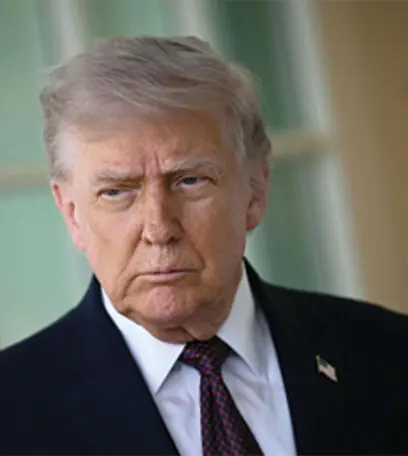
Yet that is precisely what unfolded over the weekend and into Monday, as President Donald Trump refused to apologise for his sharp criticism of Pope Leo XIV, deepening an extraordinary public dispute that now stretches across Washington, Rome and a papal aircraft somewhere over North Africa.
“There is nothing to apologise for. He is wrong,” Trump told reporters, brushing aside the controversy as if it were just another political disagreement. The pope, he said, had spoken “very weakly” on crime as well as foreign policy and was “very much against what I am doing with regard to Iran”.

In a long Truth Social post, Trump wrote that “Pope Leo is WEAK on Crime, and terrible for Foreign Policy”.
The language was blunt even by Trumpian standards. But what gives this exchange its unusual weight is not only the personalities involved, but the offices they inhabit: one the most powerful elected leader in the world, the other the spiritual head of 1.3 billion Catholics and, for the first time in history, an American-born pope.
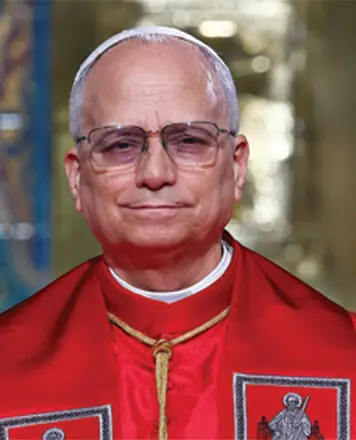
Pope Leo XIV did not respond in kind. Instead, somewhere between Rome and Algiers, he chose a register long associated with the Vatican at its most deliberate: restraint shaped into moral clarity.
“I have no intention of debating with him,” he told reporters aboard the papal plane. “I am not a politician.”
But what followed was less a rebuttal than a declaration of duty.
“I have a moral duty to speak out against war,” he said. “I have no fear, neither of the Trump administration nor of speaking loudly about the message of the Gospel.”
It was a formulation that moved the dispute beyond diplomacy and into a more ancient register, a contest between political necessity and moral witness.
At the centre of the disagreement lies the war in Iran, where a US-Israeli strike in February escalated into a broader regional conflict. The pope has repeatedly called for restraint, warning of civilian suffering and condemning what he has described as an “unacceptable” escalation of violence.
Trump, by contrast, has framed the conflict in stark strategic terms: nuclear threat, deterrence and force. “You cannot have a nuclear Iran,” the US president said, as if the sentence itself carried its own finality.
The pope’s response, however, was not framed as an argument but as conscience. “Blessed are the peacemakers,” he said, invoking scripture rather than strategy. “The Church has a duty to speak clearly for peace and reconciliation.”
Europe steps in, uneasily
If the exchange between Washington and the Vatican carried a theological undertone, Europe’s response was unmistakably political.
In Rome, Prime Minister Giorgia Meloni broke with one of her key transatlantic partners to call Trump’s remarks “unacceptable”. “The Pope is the head of the Catholic Church,” she said, “and it is right and normal for him to call for peace and condemn war.”
It was a rare public distancing from a leader who has otherwise sought to balance ideological affinity with strategic alignment with the Trump administration.
Italian bishops went further, reminding the world that the pope is “not a political counterpart but the successor of Peter”, a formulation that quietly rejected the premise of the confrontation itself.
For the Vatican, disagreement with presidents is not unfamiliar terrain. But the immediacy and tone of this exchange feel different.
Pope Leo is not only the first American pope; he is also unusually direct in framing global conflict in explicitly ethical terms, often refusing the diplomatic language of ambiguity.
His current African tour, taking him through Algeria, Cameroon, Angola and Equatorial Guinea, is meant as a journey of reconciliation and interfaith dialogue. In Algiers, he spoke of “forgiveness” at a memorial to victims of Algeria’s war of independence, urging nations to “face the future with a reconciled spirit”.
It was a message of historical memory and moral repair delivered just hours after the American president accused him of undermining US security policy.
At another moment in history, such a disagreement might have remained confined to private correspondence or diplomatic channels. But in the age of social media, it has unfolded in full public view, sharpened by Trump’s use of Truth Social and his increasingly personalised framing of political and moral authority.
His recent posts, including an AI-generated image that critics said depicted him in a Christ-like pose, added yet another layer of controversy, prompting unease even among some supporters.
The Vatican, by contrast, has remained formally composed. The pope has declined to personalise the dispute, returning instead to the language of mission and moral obligation.
Yet the contrast is difficult to miss: one man speaking in the grammar of power, the other in the grammar of conscience, both, in their own way, claiming moral authority. What makes this confrontation unusual is not that disagreement exists, but that neither side appears willing to soften its position.
Trump has doubled down. The pope has refused to engage on his terms. European leaders have entered the conversation. And beneath it all lies a question neither Washington nor Rome can easily settle: who defines morality in a time of war?
For now, the distance between the White House and the Vatican is measured less in geography than in language and in the increasingly incompatible ways both men understand their responsibility to history.
As Pope Leo continues his journey across Africa calling for forgiveness and reconciliation, and as Trump defends his hard line on Iran from Washington, their exchange has already become something larger than a dispute.
It is, in its own way, a mirror of the present moment, when political power and moral authority are no longer speaking the same language, even when they are speaking about the same war.
Published in Dawn, April 14th, 2026
