




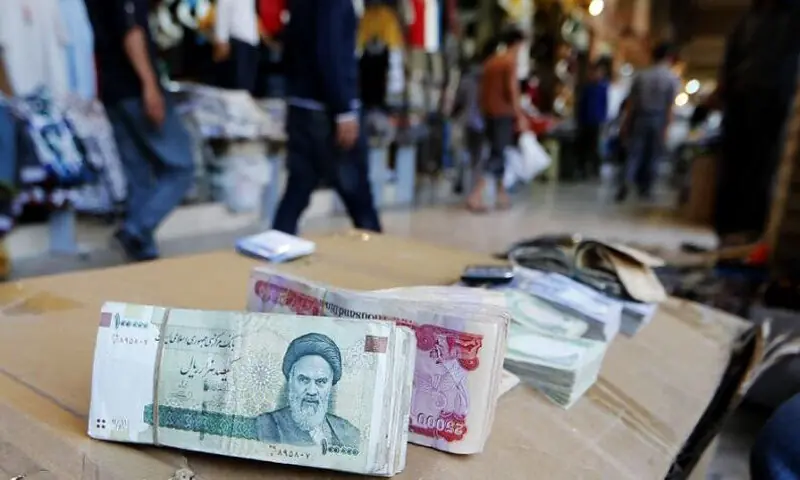
KARACHI: The value of the Iranian rial has surged nearly fourfold against the Pakistani rupee during the ongoing war, driven by speculative buying and increased cross-border trade, while demand for the currency remains high, market sources said on Tuesday.
The price rose from Rs2,500 per 10 million rials before the war to Rs10,000 per 10 million rials, reflecting a sharp increase in demand.
Speculation is high in the currency market that Iran has been earning more during the war compared to the pre-conflict period, and the currency could yield further gains in the coming weeks or months.
The Iranian currency had hit rock bottom when the United States imposed sweeping sanctions on Iran in early 2026, making it difficult for the country to access dollars or import goods.

“Demand for Iranian rial has suddenly gone up during the war, while it was available at throwaway prices earlier,” said Malik Bostan, chairman of the Exchange Companies Association of Pakistan.

He said 10m Iranian rials were available for Rs2,500 before the war but are now selling at Rs10,000 — almost a fourfold increase. He said he was unsure about the exact reasons behind the sudden surge in demand, but noted that some people were buying the currency as an investment, anticipating it would strengthen once the war ends.
Others said Iranian products, including petroleum, were entering Pakistan, increasing demand for the currency and pushing up its price.

Media reports suggest that the United States adopted a strategy to create severe economic pressure on Iran by restricting access to foreign currency, contributing to a collapse of the Iranian rial. The strategy targeted Iran’s oil exports and its access to international banking.
The US measures devalued the Iranian currency and pushed inflation to as high as 55 per cent. The lack of banking access also posed risks for global financial institutions and corporations dealing in dollars, effectively restricting dollar inflows into Iran.
Despite the war, media reports indicate that Iran’s oil production has increased by 30pc, enabling the country to earn more due to higher international oil prices. The United States has threatened to target Iran’s key oil production facilities, power stations, and to take control of the Strait of Hormuz.
Industry sources noted that Iranian oil is easily available in Balochistan, Sindh and Punjab, which may be another factor driving demand for the rial. Reports also suggest Iran is seeking payments in its own currency for oil, though this could not be independently confirmed.
At the same time, Pakistan has managed to keep the exchange rate against the US dollar relatively stable despite the escalating war in the Gulf region. However, the country is gradually facing pressure, having passed higher oil prices on to the domestic market, while LNG prices have reportedly also increased.
Published in Dawn, April 1st, 2026


