




• Top EU regulator warns of new dangers as conflicts squeeze flight paths; Europe drafts rules to counter ‘hybrid warfare’ drone threat at airports
• Oil shock expected to widen gap between strong and struggling airlines
• Carriers face ‘perfect storm’ as fare hikes risk deterring travellers
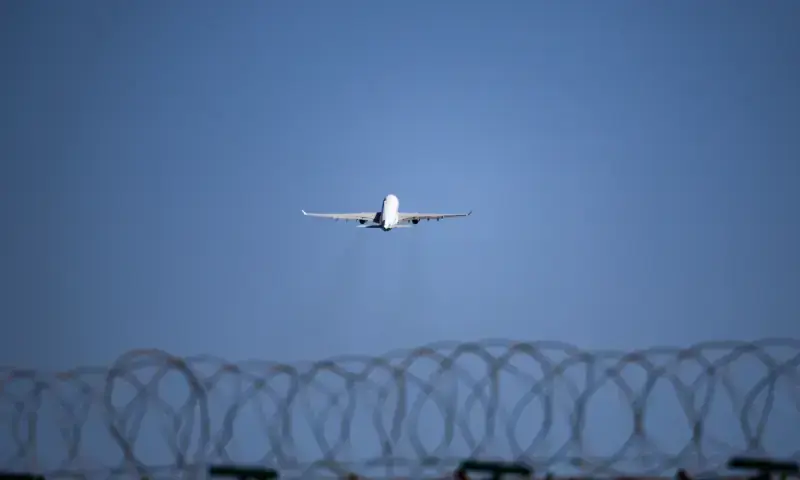
COLOGNE: Wars, including a widening conflict in the Middle East, are heightening risks for aviation as flight corridors are squeezed and drones become more widespread, Europe’s top aviation safety regulator said.
The month-old conflict involving Iran is reshaping airspace across the Middle East and increasing disruption to flights, clogging key routes between Asia and Europe.
On top of the prolonged Russia-Ukraine conflict and fighting between Pakistan and Afghanistan, which has forced airlines into ever-tighter corridors, notably over Azerbaijan and Central Asia.

“It’s clear that concentrating traffic on certain routes, the availability of the airspace for air traffic control, the fact that traffic can use routes which are not so usual, can generate safety risks,” European Union Aviation Safety Agency (EASA) executive director Florian Guillermet said.

Guillermet’s comments are the first from Europe’s aviation regulator since the Middle East war erupted. Aviation is among the most disrupted industries, with pilots facing growing risks from missiles and drones.
Guillermet, a sector veteran who previously ran France’s air traffic control system, said that while crew and controllers were trained to anticipate and mitigate such risks, shutting airspace or restricting flights was sometimes unavoidable.

“We in aviation have the means to mitigate risk. One of those means is to clear the skies,” he said, adding that while this disrupted passengers, it remained the most effective way to keep traffic density “under control at all times.”
EASA, which brings together 31 European countries, is preparing a regular overhaul of its aviation strategy as one of the world’s safest transport modes faces rising hazards, from GPS interference and drones to operational threats such as unstable approaches.
On Friday, EASA renewed its advisory to avoid airspace over Iran, Israel and parts of the Gulf until April 10.
EASA is also drafting clearer guidance on what powers can be used to counter the surge in rogue drone activity targeting civilian airports, Guillermet said. EU airports are grappling with drone incidents that security experts link to so-called “hybrid warfare” — a mix of military force, cyberattacks and other interference.
Since Russia’s 2022 invasion of Ukraine, drones have become a key weapon on both sides, and airports from Stockholm to Munich have faced drone-related disruptions suspected, though not confirmed, to be linked to the conflict.
Guillermet said clearer rules were needed, especially given the rise of “state-related” drone activity.
“We are facing a very different landscape today. So that’s what the agency is revisiting right now,” he said. “The situation we face right now is more of a hybrid warfare.”
EASA is examining technical requirements for counter-drone devices used near airports to provide clear boundaries for their use.
“We are considering the possibility of putting some kind of requirements that have to be applicable to the devices that will be used under those circumstances, so that we clearly say, ok, this is a range of powers that you have to use,” he said.
The operational challenges come as global airlines begin to hike fares and cut capacity to cope with a sudden surge in oil prices stemming from the conflict.
The industry’s ability to remain profitable may depend on whether consumers pull back on flying as higher energy costs threaten household budgets.
Jet fuel prices have doubled, putting the airline industry’s prior forecast of record profits at risk and forcing carriers from United Airlines to Air New Zealand to rethink networks and strategies.
“Airlines face an existential challenge,” said Rigas Doganis, who once headed Greece’s former national carrier, Olympic Airways, and now chairs London-based consultancy firm Airline Management Group.
“They will need to cut fares to stimulate weakening demand, while higher fuel costs will be pushing them to increase fares. A perfect storm.”
Last year, the industry reported record global passenger traffic that rebounded to about 9pc above pre-pandemic levels. That demand, alongside persistent supply-chain challenges, gave airlines significant pricing power. But the scale of fare increases needed to offset the jet fuel surge is huge when consumers are also under pressure.
“The only way to get prices up is to reduce capacity,” Barclays’ European transport equity research head Andrew Lobbenberg said. “That is what I would expect to see happen this time.”
United Airlines CEO Scott Kirby told ABC News last week that fares would need to rise 20pc to cover higher fuel costs. Hong Kong’s Cathay Pacific Airways has lifted fuel surcharges twice in the last month.
Analysts say low-cost carriers could struggle the most, given their passengers are more price-sensitive than the corporate and wealthy customers targeted by premium rivals.
The current situation marks the fourth oil shock for the industry since 2000. While replacing older planes with more fuel-efficient models is an obvious cost-cutting measure, severe supply-chain shortages have delayed deliveries.
Dan Taylor, head of consulting at aviation advisory firm IBA, said the oil shock is expected to widen the gap between financially strong and weaker airlines.
“Carriers with robust balance sheets, strong pricing power, and reliable access to capital are better positioned to absorb ongoing pressures,” he said. “In contrast, airlines with low profitability and limited funding options may face increasing financial stress.”
Published in Dawn, March 31st, 2026


