






• President, PM chair high-level meetings on austerity measures
• Proposed smart lockdowns shelved, may be reviewed later
• Emergency steps include grounding of 60pc of official vehicles
ISLAMABAD: In a significant development, the provinces have finally agreed to share the burden of the oil subsidy being passed on to local consumers amid prevailing global economic challenges, while the government shelved the issue of proposed lockdowns in the country.
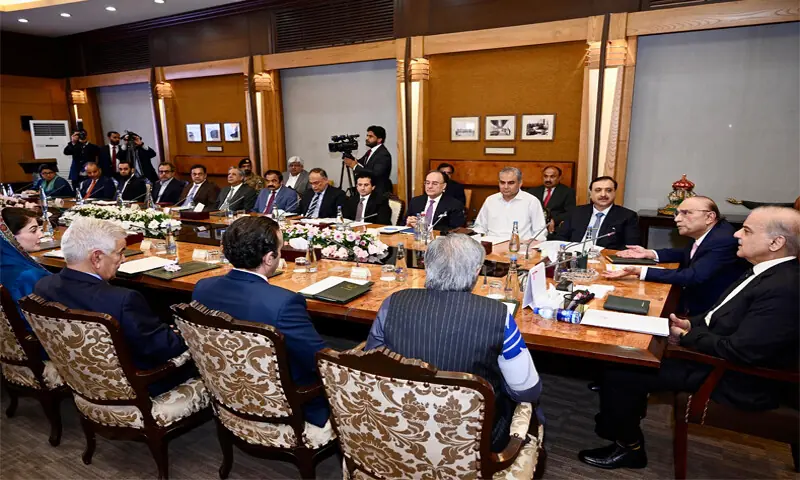
The decisions were made in a crucial meeting presided over by President Asif Ali Zardari on Monday. Besides Prime Minister Shehbaz Sharif, the meeting was also attended by Deputy Prime Minister Senator Muhammad Ishaq Dar, PPP Chairman Bilawal Bhutto-Zardari, federal ministers and all four chief ministers.
Khyber Pakhtunkhwa Chief Minister Sohail Afridi’s presence was considered significant, as he usually does not attend such meetings due to the political differences of his party, the Pakistan Tehreek-i-Insaf (PTI), with the ruling alliance.
“The issue of proposed smart lockdowns was shelved, while provinces have agreed to share the burden of the oil subsidy being given to the people according to their share in the National Finance Commission (NFC) Award,” a participant of the meeting told Dawn.

He said the issue of proposed smart lockdowns was discussed and would continue to be considered in the days to come.
Pakistan is one of the countries facing fuel crisis due to the ongoing US-Israel war on Iran and subsequent attacks of the latter on oil-producing Gulf states.
Earlier, the provinces had expressed their inability to contribute about Rs200 billion sought by the Ministry of Finance to shield consumers across the country from further hikes in petroleum prices.
Both Punjab and Sindh — the two largest provinces, supposed to share more than Rs102bn and
about Rs60bn, respectively — had instead suggested passing global prices on to the domestic market to create a price signal for behavioural change.
Meanwhile, a press release issued by the Presidency said that President Zardari had directed that, amid oil and gas supply pressures, escalating energy costs, and the evolving regional environment, all possible measures should be taken to ease the burden of rising prices on the common man, especially for essential goods and services.
The meeting was briefed on the steps being taken by the governments of the four provinces, as well as Gilgit-Baltistan and AJK, to manage price pressures, ensure the availability of essential supplies, and mitigate the impact on the public, enabling a coordinated national response.
It also reviewed the broader regional situation and its potential effects on Pakistan’s security environment, economic outlook, and food security. The meeting was assured that, despite the global crisis, timely decisions had ensured no disruption to fuel supply, and that adequate fuel stocks were currently available, with arrangement for future needs also underway.
The meeting was informed that proposals to increase oil prices had repeatedly been rejected by the prime minister, and that funds saved through austerity measures were being channelled towards public relief. It was noted that austerity efforts had begun with the government cutting down its own expenditures, including cuts to the development budget and the immediate grounding of 60 per cent of official vehicles. President Zardari reiterated that economically vulnerable people would not be left alone in this difficult time. He directed that coordinated decision-making be ensured, with alignment between economic management, energy planning, food security measures, and security preparedness.
He also stressed the need for public awareness efforts, focusing on reducing fuel consumption, encouraging the use of public transportation and promoting shared mobility practices as part of a broader demand management approach.
Earlier, in a separate meeting, Prime Minister Shehbaz said the government was making every effort to provide relief to the poor and middle-income segments and vowed not to abandon them in this challenging period.
He said government expenditures and the development budget had been slashed, and 60pc of official vehicles had been grounded to initiate austerity from within.
He added that owing to the timely decisions, disruptions in supply of fuel had been averted despite the global crisis.
A detailed briefing was given to participants on the implementation of government measures for fuel conservation, the future course of action, and the current stock position.
It was also shared that coordination was underway with the provincial governments to expedite the ownership registration of motorcycles and rickshaws to provide swift relief to the public.
An Intelligence Bureau audit report on the implementation of the prime minister’s fuel-saving and austerity campaign was also presented.
The meeting was informed that strict implementation of the prime minister’s austerity and simplicity drive was being ensured.
The meeting was told that sufficient fuel stocks were available to meet the country’s needs, with arrangements were also being made for the future. Despite an increase in levy on high-octane fuel used in luxury vehicles, the prices of the jet fuel remained unchanged. It was further informed that adequate stocks of medicines were available to fulfill the country’s requirements, and proposals for future course of action were also presented.
Published in Dawn, March 31st, 2026


